




Why Buy an Electric Vehicle?
 Electric vehicles (EVs) are gradually transforming the automotive industry in the U.S. and around the world. Like any change that affects the general public, EVs have their passionate advocates, strong opponents, and a vast majority of people in between who are curious about what this all means for them.
EVs can meet the automotive needs of many motorists; the advantages are numerous. The fact that EVs are non-polluting is beneficial for the environment, and their vastly greater efficiency can significantly reduce operating costs. For those able to charge at home, there’s the convenience of never needing to stop at a gas station during daily routines. For everyone, EVs provide smooth, quiet, and abundant power with much lower maintenance costs. The downsides are that recharging on the road takes longer than refueling, and the charging infrastructure still has a long way to go to match the gasoline infrastructure developed over the past century.
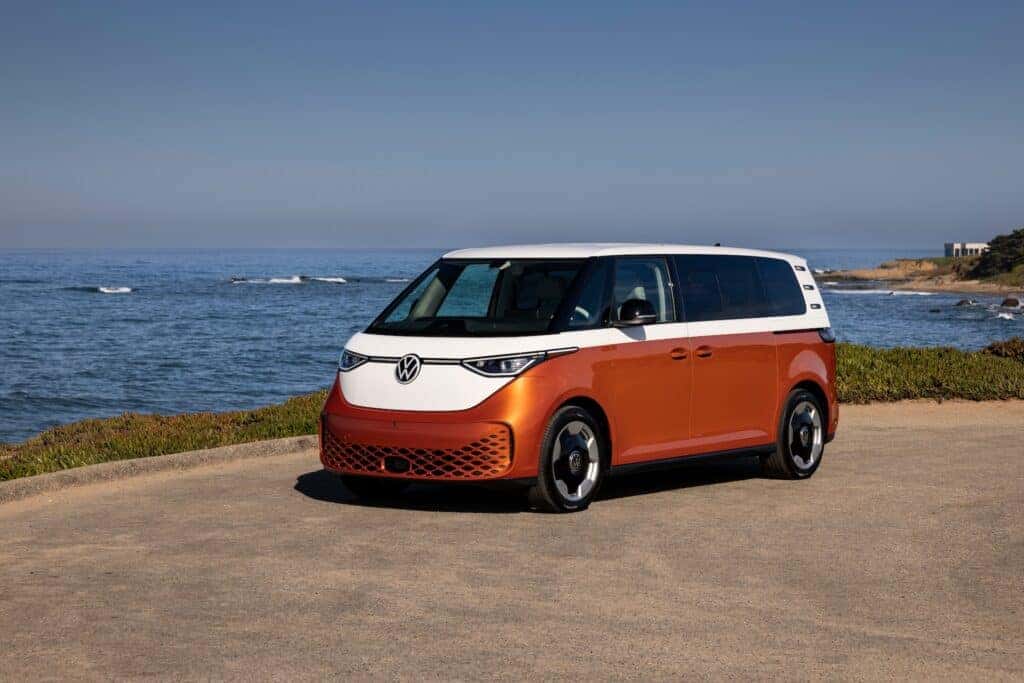
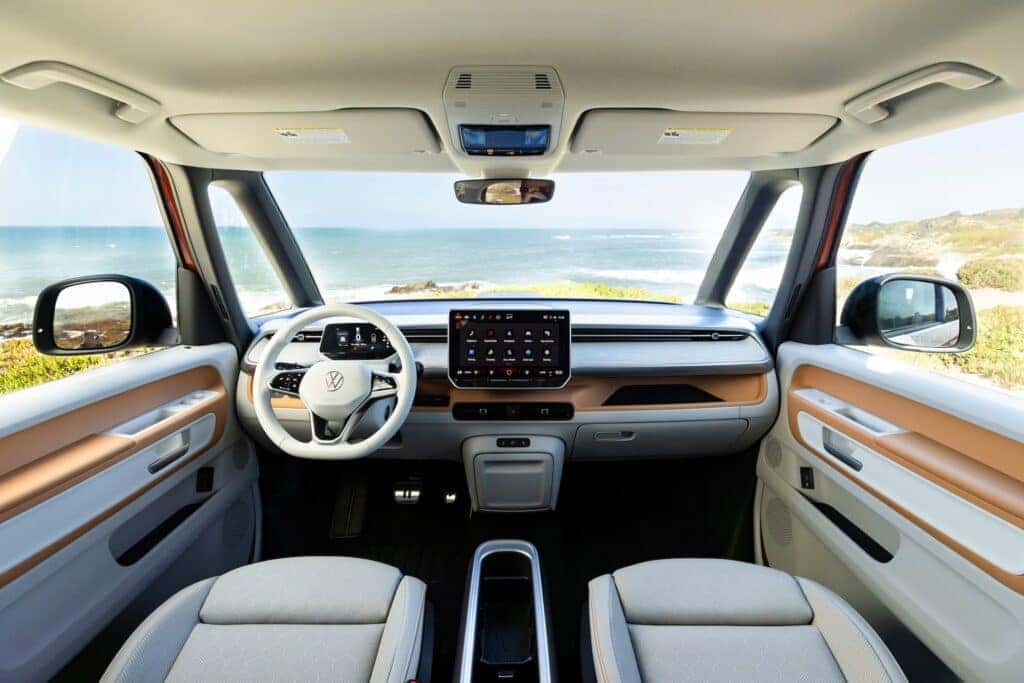
If an electric vehicle sounds like a possibility for you, Volkswagen is a good first stop. It currently offers the well-established ID.4 that sits in the heart of the best-selling compact crossover category and the spectacular ID. Buzz, the high-tech return of the iconic minibus. Read on to learn what every car shopper needs to know about electric vehicles.
How Do Electric Vehicles Work?
The first electric vehicles (EVs) emerged over a century ago at the same time as the first gas vehicles. While the lead-acid battery technology of the time was fine for getting around town, the high energy density of gasoline proved more valuable for anyone interested in driving from town to town, and the gasoline-powered automobile won the day.
Today’s technology has provided us with more efficient and easily rechargeable lithium-ion batteries that can propel vehicles two to three hundred miles repeatedly. Currently, nearly every automaker is developing its electric vehicles, and it’s quite possible that in a decade, EVs will become the norm in daily personal transportation.
But how do electric vehicles work? It’s simpler than you might think! EVs are sometimes referred to as BEVs, which stands for Battery Electric Vehicles. Like any other battery-operated device, a charged battery is the sole source of power. An EV uses robust battery banks under the cabin’s floor to supply energy to powerful electric motor(s) located between a pair of wheels to propel the vehicle. The motors are much smaller and lighter than a power-equivalent engine.
The motors are almost always positioned directly between the drive wheels. Single-motor Volkswagen EVs have the motor in the back for rear-wheel drive, while other automakers put the motor in front for front-wheel drive. Dual-motor EVs have one motor between the front wheels and another between the rear wheels for all-wheel drive. In no case is there a driveshaft running down the length of the vehicle.
Unlike internal combustion engines, which need minimum revolutions per minute (RPM) to generate enough torque to move the vehicle, electric motors provide all their torque instantly upon engagement. This eliminates the need for a transmission.
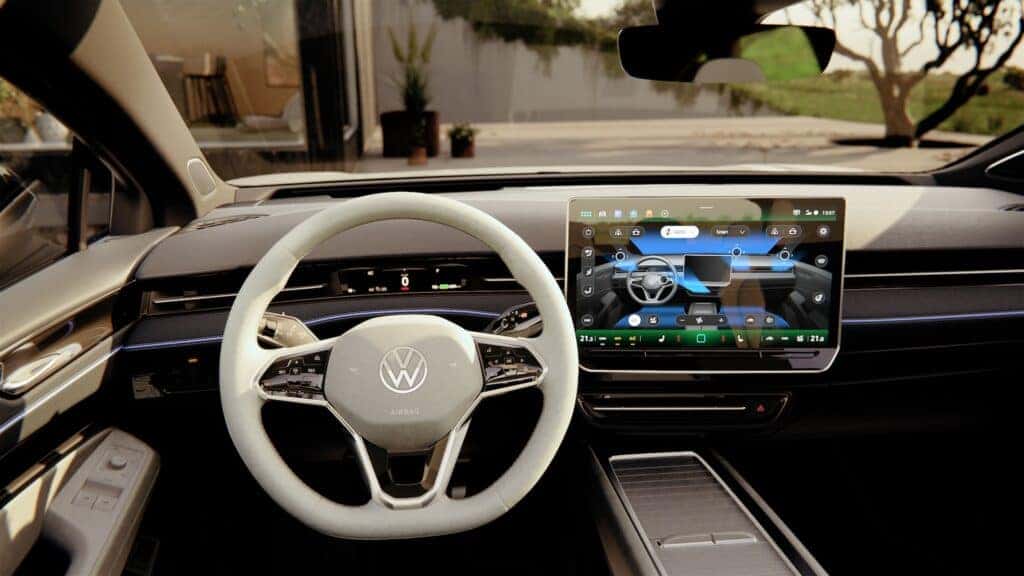
Electric motors have essentially only one primary moving part, and it rotates, so there is none of the vibration that comes from the many reciprocating (moving back and forth) parts of a gas engine. The result is a smooth operation that even the most lauded gas-powered luxury vehicles could only aspire to. Without explosions (technically controlled burns), electric motors are extraordinarily quiet. EVs often emit electronic sounds at low speeds to alert others of their presence.
EV Charging Levels
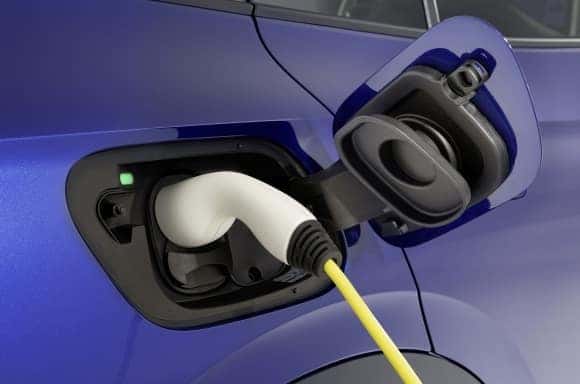
Every EV battery must be recharged, drawing power from the electric grid to keep the motor running properly. There are two ways to recharge the battery—at home and on-the-go—and three charging levels. Almost every EV comes with a couple of different charging level capabilities:
- Level 1: Level 1 uses a conventional household outlet. This is the slowest method, but if your daily drive is 20 miles or less, it is possible to charge for the next day’s drive overnight.
- Level 2: These are the kind of chargers you install in your home and can also be found at public charging stations. They will generally fully recharge your EV overnight. If your electric rates reduce at certain times of the day (usually at night), you can set the charger to engage once the lower rates apply.
- Level 3: Also known as DC-Direct or fast-chargers, these can only be found at public charging stations. They use a different port because the electricity is direct current (DC) instead of the alternating current (AC) that flows in Level 1 and 2 chargers. Batteries only accept and produce DC, and it is often the in-vehicle AC-to-DC conversion process that takes so much time. Level 3 chargers bypass that process and can typically charge a battery up to 80% in less than an hour, sometimes less than half an hour.
Why Charging Times Always Mention 80%
DC direct charge times are almost always specified for up to an 80% state of charge rather than 100%. This is because DC direct charging slows down as the battery approaches full capacity. Eighty percent is the point at which charging time is the most time-efficient. After that, transitioning from 80% to 100% can take as long as charging from 5% to 80%, and it’s hard on the battery. Relying on DC direct charging—especially to 100%—for all your EV charging can negatively impact battery life.
The Efficiency of EVs
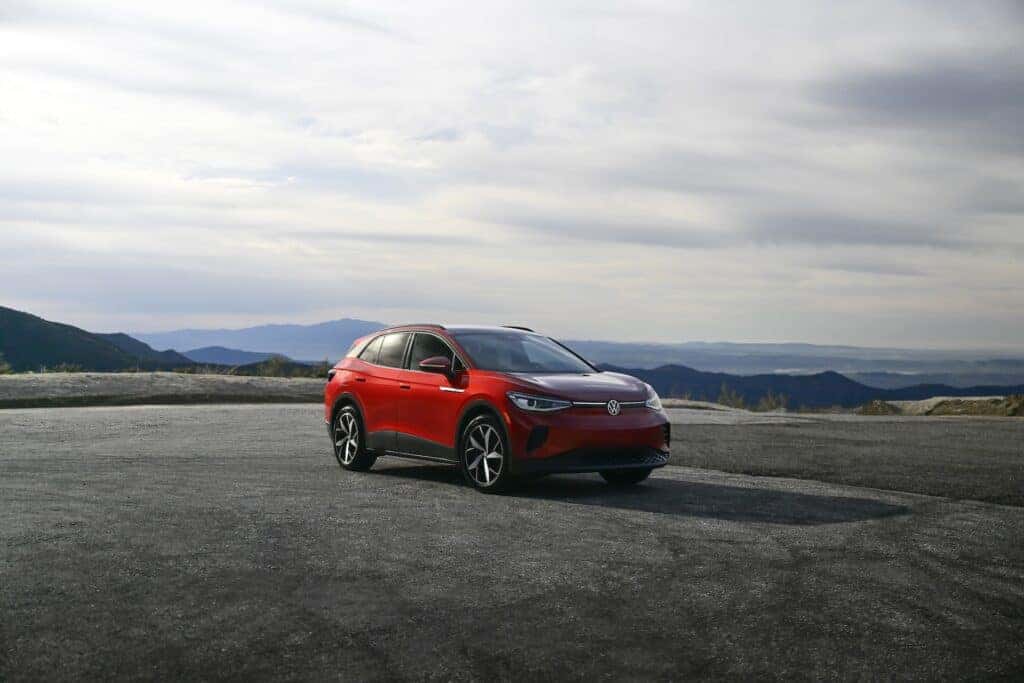
Internal combustion engines are only about 17 to 21% efficient, with the rest lost to heat and the friction created by moving so many mechanical parts. EVs, in contrast, are about 85 to 90% efficient. Put another way, the ID.4’s larger 82-kWh battery stores about the same energy as just 2.5 gallons of gas, and yet it can operate the ID.4 for up to 291 miles; no gas vehicle can even come close to this on 2.5 gallons. That is how much more energy-efficient EVs are and why switching to an EV isn’t just switching gas costs for electricity costs—the operating cost is much less expensive.
The Maintenance of EVs
There isn’t any. Okay, that isn’t quite right. You still must change tires, wipers, and washer fluid, as well as occasionally change the cabin filter. But the drivetrain is effectively maintenance-free. There is no oil to change and no radiator or transmission coolant to top off. Nor are there fuel or water pumps, universal joints, or any of the many other engine components that will eventually fail. Think of the last time you had to perform maintenance on an electric fan—that is what maintaining an EV drivetrain is like.
 EV Benefits
There are many reasons why electric vehicles provide better driving experiences than their gasoline-powered counterparts. From their environmental friendliness to their smooth and quiet rides to the convenience of charging at home and never having to visit a gas station again, here is a quick overview of the benefits you’ll enjoy if you upgrade to an EV:
- Environmental Benefits: Electric cars have little to no tailpipe emissions due to the lack of gasoline engines. They can take advantage of renewable resources like solar power, hydropower, and wind power. Even if the source power isn’t renewable, the EV’s vastly greater efficiency still makes it an environmental win.
- Low-Cost Operation: EVs can be much less expensive to operate than ICE vehicles, as they can be over four times more efficient.
- Performance: Electric vehicles enjoy near-silent rides because there’s no engine noise, and they often boast much more powerful horsepower and torque numbers than traditional gas-powered cars.
- Low Maintenance: With an effectively maintenance-free drivetrain, the time and cost savings of maintaining an EV are considerable.
Find Your Next EV at Bud Brown Volkswagen
To learn more about why electric vehicles are excellent choices in Shawnee, Overland Park, Olathe, and beyond, feel free reach out to our office! You can also contact us with any questions regarding the Volkswagen ID.4, ID. Buzz, or any other upcoming vehicles in our electric lineup. If you’re considering bringing an EV home for yourself, visit our finance team for your next steps.