




What Is 4MOTION AWD and Do You Need It in Kansas
If you’ve contemplated purchasing a crossover or SUV in the past few decades, you’ve probably also asked yourself: do I need an all-wheel drive (AWD) vehicle, or would a front-wheel drive (FWD) model suffice? There are advantages to either option, but the answer may lie with how you use (or intend to use) your vehicle. Is AWD – and especially the Volkswagen 4MOTION AWD system – worth the investment? Bud Brown Volkswagen gives you some facts to help you decide.
AWD vs. 4WD
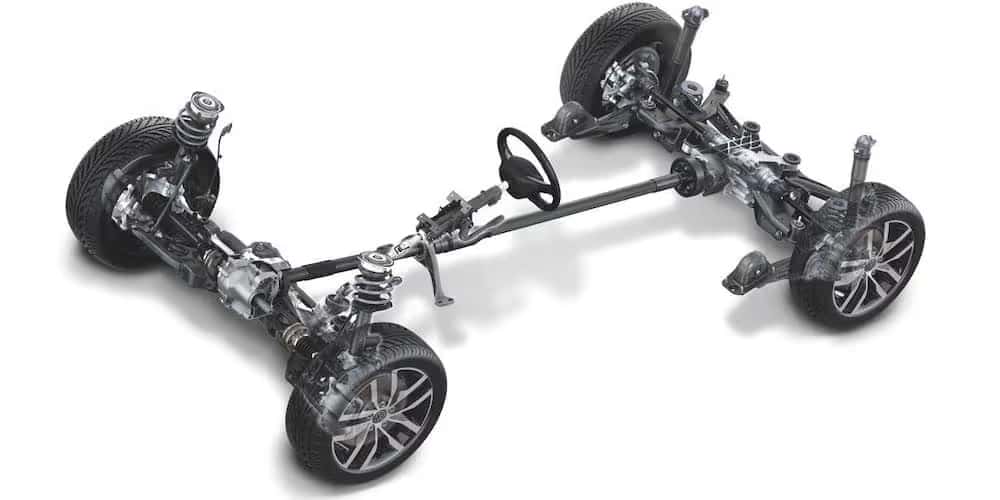
First, all-wheel drive isn’t necessarily four-wheel drive. Yes, there are four wheels on a vehicle, and they all can be driven in some form or another, but typically the 4WD connotation denotes a system that offers a direct mechanical connection between the front and rear axles. In systems like this, the front wheels will want to rotate at the same speed as the rear wheels – great for maximizing grip on slippery surfaces and especially rugged terrain. On dry roads, however, it can be a problem, especially in corners, where front wheels want to rotate at different rates than the rear wheels. If 4WD is engaged on roads with good traction, this can create destructive binding in the system. Slick or unpaved surfaces allow slippage to relieve this binding.
All-wheel drive systems are typically “on” all the time but aren’t necessarily driving all four wheels to their full potential at any given moment. In the case of 4MOTION, the majority of the vehicle’s power is sent only to two wheels – typically the front – until the vehicle senses slippage, and power is sent to wheels with more traction. Doing so both optimizes fuel efficiency but also allows front- and rear-wheels to be driven at different speeds, preventing any mechanical backlash while cornering. The ability to automatically optimize power for the conditions at hand also means the driver doesn’t have to determine whether conditions truly warrant safely engaging 4WD.
AWD on electric vehicles – including the Volkswagen ID.4 and ID.Buzz – handle power distribution a little differently. Typically, AWD EVs power the front and rear wheels with at least two different motors. There is no mechanical connection between the axles, but power application can still be optimized for slippery conditions.
For both gas- and electric-powered vehicles, AWD offers benefits for off-road use and can be very useful for getting through sand or muddy trails, but its primary purpose is to keep you on the road when paved surfaces lack traction.
Not More, But Optimized Traction
It’s important to note that AWD systems don’t necessarily increase traction, as traction is dependent on the tire shape and size, vehicle weight, and the amount of friction between the tire and the road surface. On any given road in the same conditions, these factors don’t change much between a FWD and AWD vehicle. AWD, however, allows a vehicle to make better use of its potential traction. The ability to apply power over all four wheels increases the likelihood of finding grip when you need it most.
This makes AWD particularly useful when it snows. Snow both increases rolling resistance and reduces traction, and AWD can move a vehicle through it with greater stability. That said, it is no substitute for winter tires. Winter tires increase traction not only through unique tread patterns but a more pliable rubber compound, which ensures the tire can flex and grip the road surface even in frigid temperatures.
Since Olathe receives between 13 and 19 inches of snow each year, 4MOTION and winter tires are a nearly unbeatable combination. But Olathe also receives rain nearly year-round, and that’s where 4MOTION can also be a beneficial tool while on the road.
On mountain roads, such as those in our neighboring Colorado, AWD can be particularly useful because the roads constantly curve as they follow the contours of the mountains and seem to be trying to throw you off at every moment. Any additional or optimized traction is extremely welcome. In Kansas, that is less of an issue with our straighter, flatter roads, but it’s not like we never turn.
Do We Need 4MOTION in Olathe, Kansas?
Need? Probably not, especially if you’re willing to adjust driving habits to the weather and leverage winter tires during the coldest months of the year. Is 4MOTION useful? You bet! It can give you welcome confidence and stability at the very times when conditions make driving the most challenging. Of course, if you travel out of state to mountainous areas, particularly in the winter, or regularly find yourself facing steep dirt trails or driveways, you may be thankful for 4MOTION.
Which Volkswagen Models Have 4MOTION AWD?
All Volkswagen SUVs are available with 4MOTION AWD, including Taos, Tiguan, ID.4, Atlas, and Atlas Cross Sport. You will also find it standard on the Golf R for performance reasons and available on the ID.Buzz.
Barring extreme off-roading, whatever your needs are and wherever you plan to travel, Volkswagen has a vehicle to fit. The place to shop for the Volkswagen that best suits you is Bud Brown Volkswagen, with its large selection and the Bud Brown Advantage Lifetime Limited Warranty, available on new, Certified Pre-Owned, and several other Pre-Owned models.
0 comment(s) so far on What Is 4MOTION AWD and Do You Need It in Kansas